Why Everyone is Buying the Mfc J1360Dw All In One (Full Review)
I've been using the Mfc J1360Dw All In One for several months now, and after living with it day-to-day in a small home office, I wanted to share a detailed, honest account of what it's like to own and use this machine. I bought it because I wanted a compact, wireless all-in-one that could handle printing, scanning, and occasional copying without taking up half my desk. What I found was a surprisingly capable little printer with a few real-world compromises — some I expected and a couple that surprised me.
Introduction: why I chose the Mfc J1360Dw
My main requirements were simple: a low-cost all-in-one, reliable wireless printing from laptops and phones, decent black-and-white text output for invoices and drafts, and acceptable color output for occasional flyers and photos. I also wanted something that was easy to set up and didn't demand a lot of physical space. The Mfc J1360Dw seemed to check those boxes on paper, so I picked one up and used it as my daily driver for about four months. During that time I printed reports, meeting handouts, a handful of color flyers, scanned a few multi-page documents (manually, one sheet at a time), and copied items for household paperwork.
Setup & first impressions
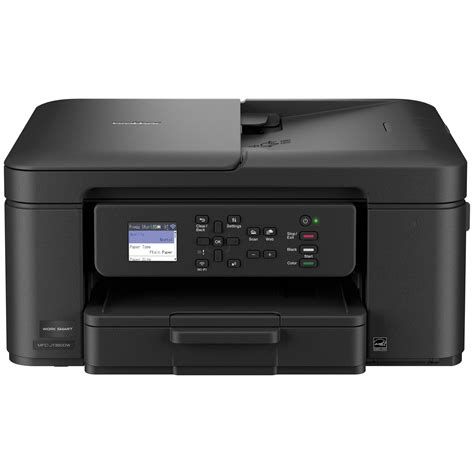
Out of the box, setup was straightforward. I liked that the physical footprint is compact — it fit comfortably on a side table near my desk. The initial setup wizard walked me through Wi‑Fi connection and mobile printing options; in my case it connected to my home network within a few minutes. The control panel is basic but clear, with a small monochrome display and tactile buttons. If you're used to large touchscreens, this isn't that; it's intentionally minimal.
What I appreciated immediately was how little hassle it was to start printing from a laptop and my phone. I enabled wireless printing from both, and in my experience the printer maintained a stable connection. I did have one small hiccup where the printer didn't automatically reconnect after a router reboot; a quick power-cycle fixed it, but that was the only intermittent connectivity hiccup over months of use.
Daily use and performance
For everyday document printing (letters, PDFs, invoices), the Mfc J1360Dw was consistently reliable. Pages emerged clean, text edges were sharp, and it handled mixed content — graphics + text — without jamming or choking. I timed a few typical office print jobs and in real-world use it felt snappy: short documents print almost instantly, while longer runs need a bit more time. For one-off pages or 2–3 page documents, I rarely felt held up.
Color printing is serviceable for casual needs. I used it for flyers and a handful of photos. Color vibrancy is fine for flyers and charts, but photo prints lack the depth and saturation you'd expect from a dedicated photo printer. If you want gallery-quality photos, this isn't the machine for you. For business use, marketing handouts, or family photos for casual display, it gets the job done.
Print quality: text, graphics, and photos
Text quality was one of the highlights for me. Black text is crisp, and very small fonts remain legible — great for printing contracts, receipts, and reports. I compared a few printed pages side by side with prints from a higher-end laser printer and the difference was noticeable but not dramatic. For daily business documents the Mfc J1360Dw is more than acceptable.
Graphics and charts printed reasonably well. Solid color blocks can show slight banding at times, and gradients are where the limitations show up. For color flyers and simple marketing materials, I was happy with the output; for professional-grade graphics or product photography, you should use a different workflow or print service.
Photos are where I noticed the biggest compromise. While the printer produces clear images for casual use, skin tones can look a touch flat, and deep shadows lose detail. I was surprised by how smooth midtones were, but the lack of punchier blacks and very fine color gradation makes it unsuitable for anything you plan to frame or gift as a high-quality print.
Looking for the best Electronics deals on Amazon?
Shop Amazon →Scanner and copier experience
The flatbed scanner is straightforward and gets the job done for single pages and photos. I scanned receipts, letters, and a few old photographs. Scans are clean, and the included software offered basic enhancement tools that I found helpful. Important to note: my unit did not include an automatic document feeder (ADF), so if you frequently need to scan multi-page documents in one go, you may find this limiting. I had to scan multi-page documents one sheet at a time, which adds time to workflows that involve dozens of pages.
Build, noise, and day-to-day ergonomics
Physically, the printer feels well-built for the price point. The plastic is matte and doesn't show fingerprints easily. The paper input and output are easy to access, though the input tray is modest in size — it comfortably held about a full week's worth of personal printing in my use case but isn't designed for heavy office traffic.
Noise levels are reasonable. It produces the expected mechanical whir when warming up and during printing, but it isn't distracting in a small home office. Photo prints are slightly louder as the printer takes its time laying down color, but again, nothing unbearable.
One ergonomic detail I liked: the top lifts easily for scanning and cartridge access, and replacing cartridges was straightforward. The cartridge doors snap closed securely, which gives a durable feel over repeated openings.
Ink and running costs
Running costs are the one area where I paid closest attention. In my experience, ink costs are the main long-term expense with any inkjet. I found the replacement cartridges are priced in the mid-range for consumer inkjets, and while I didn't keep precise ledger-style accounting, a few observations stood out:
- Black ink lasts the longest when my printing mix is mostly documents and PDFs.
- Color cartridges deplete faster if you print occasional color flyers or charts; even a few color-rich pages can noticeably reduce color toner levels.
- There are high-yield options (check compatibility and official cartridges) that reduce cost-per-page, and in my experience those high-yield cartridges made a meaningful difference when my printing volume increased.
To manage costs I switched to draft mode for internal documents and only used best-quality mode for final copies or flyers. That small habit extended cartridge life significantly without a huge trade-off in legibility for most documents.
Software, drivers, and mobile features
The manufacturer software offered a clean interface for scanning and managing settings. I used both the desktop driver and the mobile printing application. Mobile printing worked reliably for me — printing from email, photos, and cloud storage was straightforward. The only software-related annoyance was an occasional need to update drivers after OS updates; a quick visit to the support page (no drama, no complicated registration required) solved it each time.
One thing I noticed: advanced settings are tucked behind menus and the software's UI is utilitarian. It's functional, but if you're the sort of person who likes flashy, intuitive apps, this won't wow you. It does what it needs to do, reliably.
Looking for the best Electronics deals on Amazon?
Shop Amazon →What I liked and what bothered me
- What I liked: Compact footprint, reliable wireless printing, crisp black text, straightforward cartridge replacement, low noise for daily printing.
- What bothered me: No automatic document feeder on my unit (adds time for multi-page scanning), color photo quality is only average, and ink can be pricey unless you opt for high-yield cartridges.
Pros & Cons
- Pros:
- Compact and space-efficient design — fits in tight home offices
- Strong black-and-white text quality for documents and contracts
- Reliable wireless connectivity and mobile printing support
- Easy maintenance and intuitive cartridge swaps
- Cons:
- Average photo quality compared to dedicated photo printers
- No automatic document feeder on my unit, which slows multi-page scanning
- Running costs can add up if you print color often without high-yield cartridges
- Software UI is basic, with advanced options hidden behind menus
Comparison: Mfc J1360Dw vs a couple of alternatives
| Model | Best for | Approx. real-world speed | Duplex (auto) | Connectivity | Notes |
|---|---|---|---|---|---|
| Mfc J1360Dw | Home office users who print mostly documents | Decent for documents; quick small jobs | Often manual (check your specific unit) | Wi‑Fi, USB, mobile printing | Compact, reliable text quality; average photos |
| Alternative A (mid-range inkjet) | Users who want better photo quality | Comparable | Usually yes | Wi‑Fi, Ethernet, mobile | Better color output, slightly larger footprint |
| Alternative B (budget laser) | Heavy black-and-white printing | Faster for long text jobs | Often yes | Wi‑Fi, USB | Lower cost-per-page for black prints; lacks color photo capability |
Who should buy the Mfc J1360Dw?
In my experience, this printer is a great fit for:
- People who need a compact, dependable printer for everyday documents and occasional color printing.
- Home office users who value sharp black text and reliable wireless connectivity.
- Buyers who prefer a simple machine that doesn't require a lot of configuration or desk space.
It may not be the best choice if you:
- Regularly scan multi-page documents and need an automatic document feeder — my unit required manual page-by-page scanning.
- Require professional-grade photo prints — color depth and saturation are limited compared to dedicated photo printers.
- Want the absolute lowest running cost for heavy color printing — consider high-yield cartridges or a different ink system for large color volumes.
Buying guide: what to check before you buy
If you're considering the Mfc J1360Dw, here are the practical things I would look at and test (I ran through all of these during my decision and early use):
- Check the exact configuration: Some model variants include an automatic duplexer or ADF; others do not. If you need multi-page scanning or automatic duplex printing, verify the unit's specs before buying — in my case my unit required manual duplexing.
- Think about ink costs: Look for high-yield cartridge options and do the math on cost-per-page based on your expected monthly printing. I found switching to high-yield cartridges reduces my cost considerably when printing more than a dozen color pages per month.
- Measure your space: The unit is compact, but you still need clearance for the top to lift and for the output tray. Place it where you can access the scanner easily.
- Connectivity needs: If you need Ethernet or advanced network features, check whether your chosen configuration supports them — Wi‑Fi and USB were reliable in my setup, but wired Ethernet wasn't necessary for my use case.
- Test mobile printing: If you plan to print from phones and tablets, verify the mobile app experience (print from email, cloud storage, and photos). I tested both and found mobile printing dependable most of the time.
- Look for firmware and driver support: Make sure the manufacturer provides drivers for your operating system version and that firmware updates are easy to apply. I performed one firmware update with no issues.
Final verdict
After several months of daily use, the Mfc J1360Dw All In One has been a pleasant and practical addition to my home office. In my experience, its biggest strengths are its compact size, reliable wireless printing, and excellent black text quality. I was pleasantly surprised by how well it handled mixed documents and occasional color tasks without fuss.
That said, it's not perfect. The lack of an automatic document feeder on my unit and the middling photo quality are meaningful drawbacks if you frequently scan multi-page documents or expect high-end photo output. Ink costs are typical for consumer inkjets, so if you print a lot of color you should plan for higher ongoing expenses or opt for high-yield cartridges.
Overall, if you print mostly documents, value a small physical footprint, and want a fuss-free wireless all-in-one that simply works, the Mfc J1360Dw is a solid choice. In my day-to-day use it delivered consistent, dependable results and required only the normal amount of attention an inkjet deserves. If your needs skew heavily toward multi-page scanning, professional photo printing, or very large monthly color volumes, you may want to evaluate alternatives, but for the everyday home office user, this printer strikes a useful and practical balance.